Identification Guide
Identify illegal bird callers
The use of electronic bird callers is illegal at all times in Malta under EU Birds Directive Article 8 and national law. This guide helps you recognise and report them.
How to identify an electronic caller

Golden Plover
Pluviera
Illustration: Naumann, 1905 (public domain)
The Golden Plover is the most commonly targeted species with illegal electronic callers in Malta. Its call is a mournful, far-carrying whistle.
Natural call (for comparison)
Recording XC1005160 by Lars Edenius, via xeno-canto.org (Creative Commons)
Electronic caller characteristics
A mellow, liquid 'tloo-ee' whistle that carries long distances. Electronic callers repeat this on a loop for hours, particularly at night, from concealed speakers near trapping sites.
Signs of illegal use
- Repetitive — same exact call looping every few seconds
- Ongoing for hours without stopping, especially at night
- Emanating from behind walls, under bushes or from vehicles
- Sometimes mixed with other wader calls
- Noticeably 'tinny' or digital-sounding
Most active Oct–Jan during the trapping season.
Report this caller
Song Thrush
Malvizz
Illustration: Naumann, 1905 (public domain)
The Song Thrush is legally trappable using clap nets, but the use of electronic callers to attract them is illegal. It has a distinctive musical song with repeated phrases.
Natural call (for comparison)
Recording XC1149293 by Lars Edenius, via xeno-canto.org (Creative Commons)
Electronic caller characteristics
A rich, musical song with repeated phrases — the bird repeats each phrase 2–4 times before moving on. When electronic, the same phrases repeat robotically without variation.
Signs of illegal use
- Identical phrase repeated more than 4 times
- No natural variation between repetitions
- Continues unchanged through weather changes
- Often from small battery-powered speakers at trapping sites
Most active Oct–Dec during trapping season.
Report this caller
Turtle Dove
Gamiema
Illustration: Naumann, 1905 (public domain)
The European Turtle Dove is classified as Vulnerable by the IUCN. Its purring call is frequently used for illegal luring. Spring hunting of this species remains contested under EU law.
Natural call (for comparison)
Recording XC1153228 by Arjun Dutta, via xeno-canto.org (Creative Commons)
Electronic caller characteristics
A gentle, purring 'turr-turr' — soft and rhythmic. Electronic versions are louder, perfectly consistent and play on a mechanical loop without natural variation.
Signs of illegal use
- Perfectly metronomic purring with zero rhythm variation
- Hidden speakers in vegetation or in vehicles
- Active outside breeding season
- Often combined with nets targeting other species
Peak activity during spring migration (Apr–May).
Report this caller
Common Quail
Summien
Illustration: Naumann, 1905 (public domain)
Common Quail electronic callers are widely used illegally during spring migration. The call is distinctive and easily recognised — a rapid three-note pattern.
Natural call (for comparison)
Recording XC1142853 by Uku Paal, via xeno-canto.org (Creative Commons)
Electronic caller characteristics
A three-note call described as 'wet-my-lips'. When electronic, this repeats rapidly and mechanically for extended periods, far louder than a natural quail.
Signs of illegal use
- Rapid, unbroken repetition of the tri-syllabic call
- Constant volume regardless of wind or weather
- Near cornfields, garrigue or low scrubland
- Used with crop nets over tall vegetation
Active mainly during spring (April–May) migration.
Report this caller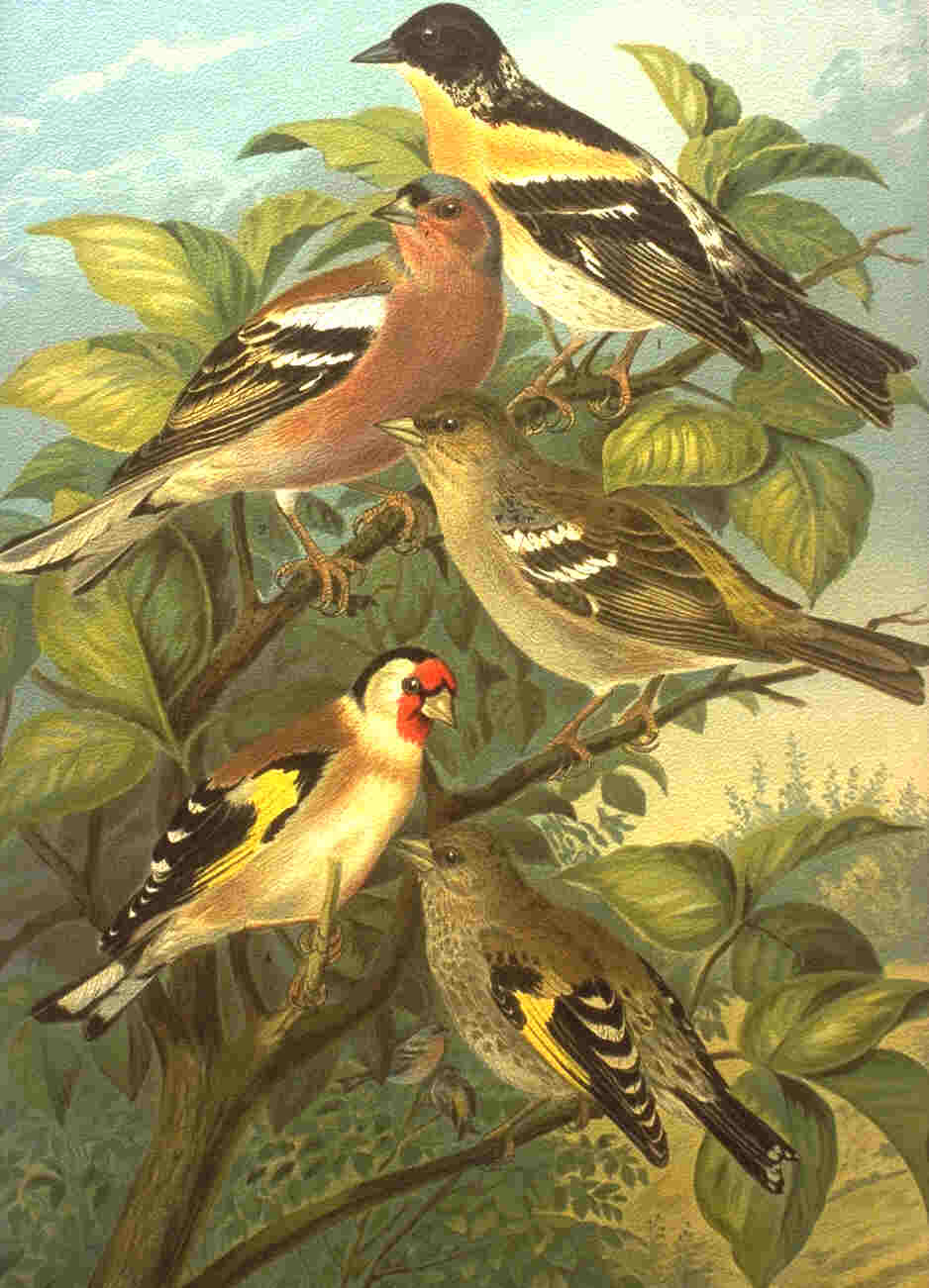
Finches (various species)
Ekru, Gardell, Verdun, Ġojjin, Sponsun…
Illustration: Naumann, 1905 (public domain)
Finch trapping was banned by the European Court of Justice in June 2018. Seven species are covered: Linnet, Goldfinch, Greenfinch, Siskin, Hawfinch, Chaffinch and Serin.
Natural call (for comparison)
Recording XC703977 by Lars Edenius, via xeno-canto.org (Creative Commons)
Electronic caller characteristics
Calls vary by species — high thin chips (Siskin, Linnet), rich liquid notes (Goldfinch), buzzy calls (Greenfinch). Electronic versions loop continuously near caged live finches.
Signs of illegal use
- Small caged birds (sparrow-sized) at trapping sites
- Birds tethered to sticks and swung up and down
- Electronic chips/whistles looping near clap-net sites
- Tiny cage traps hidden in vegetation
All finch trapping and callers illegal year-round.
Report this callerHeard a caller? Here’s what to do
Record audio
Use your phone to record the sound — audio is crucial evidence
Note the location
Get GPS coordinates from your phone or note nearby landmarks
Report immediately
Call 119 (Police/EPU) or 2134 7645 (BirdLife Malta)